The bathroom is one of the most common places where falls happen, and for many people living with foot drop, it can be one of the first areas where daily routines begin to feel different. Wet, slippery surfaces combined with balance challenges can turn simple tasks into situations that require extra focus.
The good news is that a few thoughtful changes can make the bathroom safer, more comfortable, and easier to use.
Showering
Many people find that showering requires more attention than it used to. Adding the right support can reduce risk and make the experience more comfortable.
Checklist
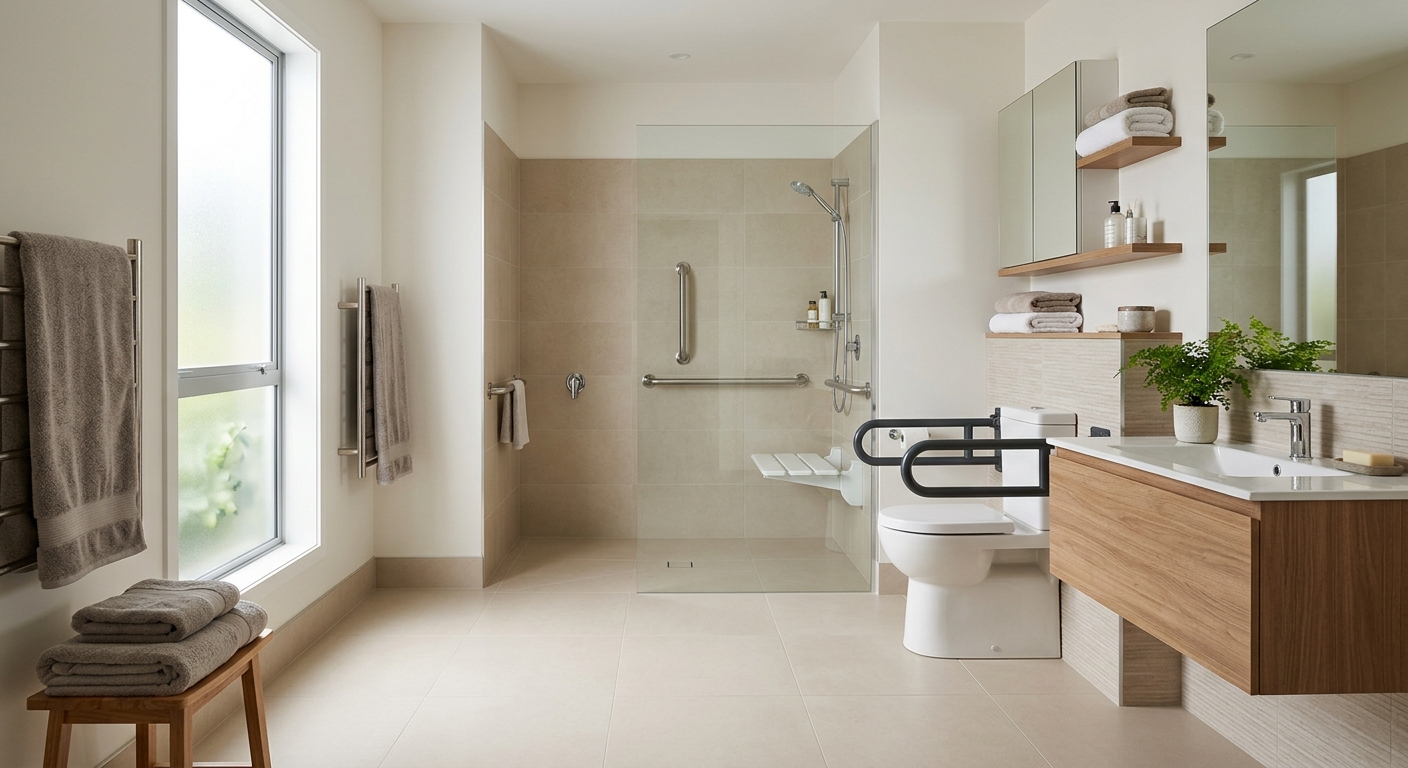
- Use a shower chair with a rotating seat so you can sit first and rotate into position instead of stepping over a tub wall.
- Install grab bars in locations where you actually need support rather than only where installation is easiest.
- Consider working with a physical or occupational therapist to identify the safest grab bar placement for your needs.
- Use a handheld showerhead so you can wash while seated without needing to stand, stretch, or balance.
Tub-to-Shower Conversions
Some people choose to modify their bathroom by removing the need to step over a bathtub wall. This may involve a “tub cut” or a complete walk-in shower conversion.
While these changes require a larger investment, they can make a major difference for people who find stepping into a tub unsafe or stressful.
Checklist
- Get multiple quotes from different contractors before starting a renovation.
- Ask whether insurance, Medicare, or Medicaid may cover any portion of medically necessary home modifications.
- Consider starting with lower-cost improvements like a shower chair, grab bars, and safety mats if a full remodel is not possible.
- Choose modifications based on your actual mobility needs and bathroom layout.
Baths
Giving up baths can be a difficult adjustment for some people. Many describe missing the comfort and relaxation that a traditional bath provided.
Checklist
- Consider a supported bath bench if getting in and out of a regular bathtub has become difficult.
- Explore a transfer bench that allows safer movement into and out of the tub.
- Focus on solutions that allow you to maintain independence while prioritizing safety.
Choosing Bathroom Safety Products
People in the community use many different products, including shower chairs, transfer benches, brace-friendly bath mats, and other bathroom accessories.
What works for one person may not work for another. The best choice depends on factors such as:
- Bathroom layout
- Balance ability
- Strength and mobility level
- Type of mobility aid being used
- Personal comfort and confidence
Checklist
- Measure your bathroom space before buying equipment.
- Check that products are stable and properly installed.
- Choose equipment that supports your daily routine, not just occasional needs.
- Share helpful solutions with others in the community.
This article provides general information about bathroom safety modifications and is not a substitute for a professional home safety assessment. An occupational therapist or healthcare professional can evaluate your specific bathroom setup, mobility needs, and recommend solutions that may be appropriate for your situation. Product examples and community experiences are shared for informational purposes only and do not represent an AFDA endorsement.