If you use a cane, walker, or other mobility aid, you’ve probably run into this problem: you only have one free hand, but life constantly needs two. Carrying groceries, holding an umbrella, bringing a water bottle on a walk—all of it gets harder when one hand is already doing an important job.
This is one of the most common daily frustrations our community talks about. The good news is that there are practical ways to make everyday tasks easier while keeping your hands available for balance and safety.
The Rain Problem
Holding a cane and an umbrella at the same time can be awkward and increase the risk of losing balance. Consider these hands-free alternatives:
- Wear a rain poncho or hooded rain jacket to stay dry without needing to hold an umbrella.
- Use a clip-on or hat-mounted umbrella that attaches to a cap, hood, or headband.
- Try a cane-mounted umbrella holder that secures an umbrella directly to your cane or walker.
- Choose a golf umbrella with a wrist or forearm strap if you prefer a traditional umbrella but want to reduce the strain on your hand.
Carrying Groceries and Bags
Carrying shopping bags while using a cane—especially on stairs—can be challenging. Moving the weight away from your hands can improve comfort and safety.
Checklist
- Use a lightweight backpack to keep both hands free.
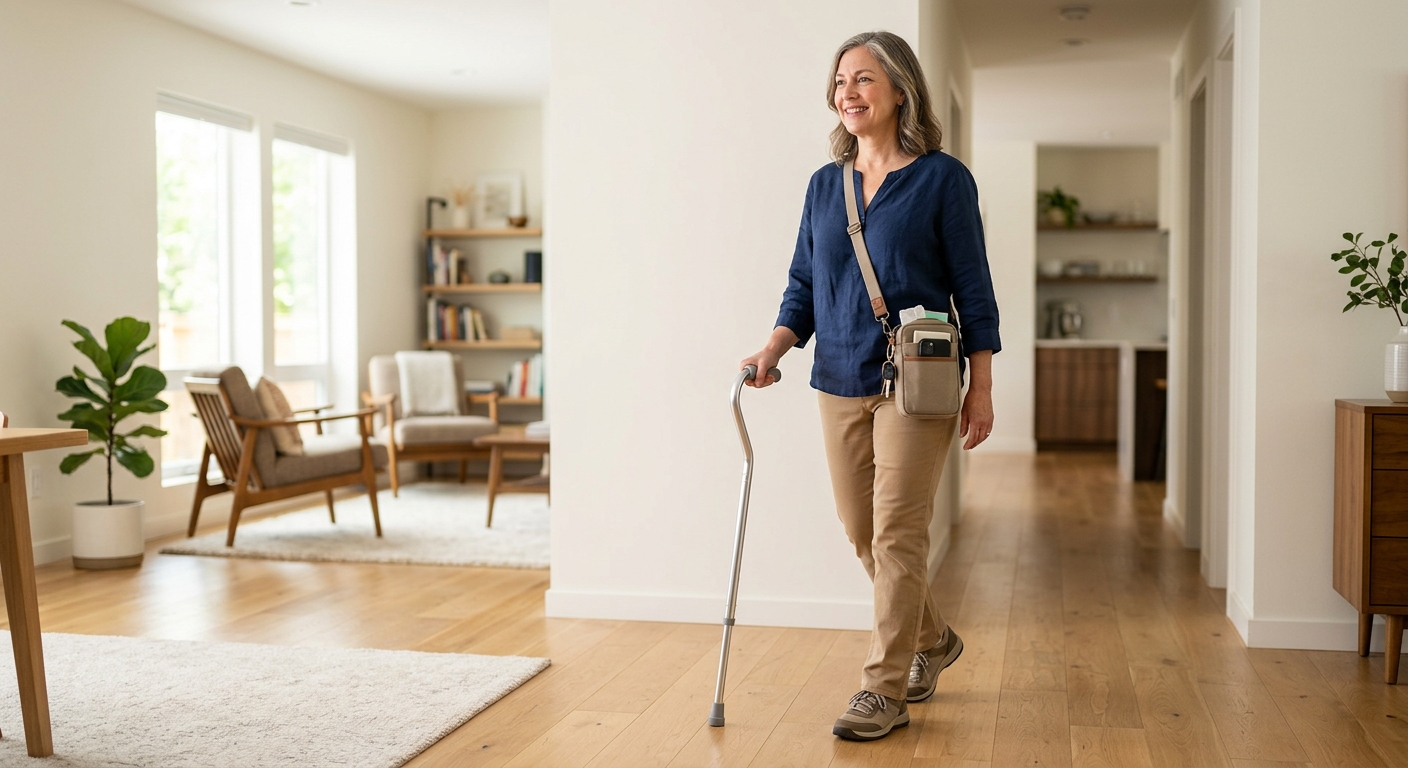
- Carry smaller essentials in a crossbody bag or fanny pack.
- Use a rolling cart or wheeled grocery bag for heavier items.
- Keep one hand available for the handrail whenever you’re using stairs.
- If there’s no railing or the load feels unsafe, make two trips or ask for assistance.
Carrying a Water Bottle on Walks
Staying hydrated is important, but carrying a bottle shouldn’t interfere with safe mobility.
Checklist
- Choose a cane with a built-in or attachable cup holder.
- Wear a hydration belt or fanny pack with a bottle holder.
- Use a small hydration backpack for longer walks.
General Tips for Hands-Free Mobility
Checklist
- Keep your hands focused on balance whenever possible.
- Shift weight from your hands to your back, waist, or a wheeled cart.
- Select carrying solutions that match your mobility aid and daily routine.
- Test new accessories in a safe environment before relying on them outdoors.
- Replace worn or unstable accessories that could affect your balance.
This article provides general information and practical tips for everyday mobility. It is not medical advice or a substitute for professional assessment. The safest solution depends on your individual mobility needs, strength, and environment. If you’re unsure whether a product or technique is appropriate for you, consult your physical therapist, occupational therapist, or healthcare provider before using it.