
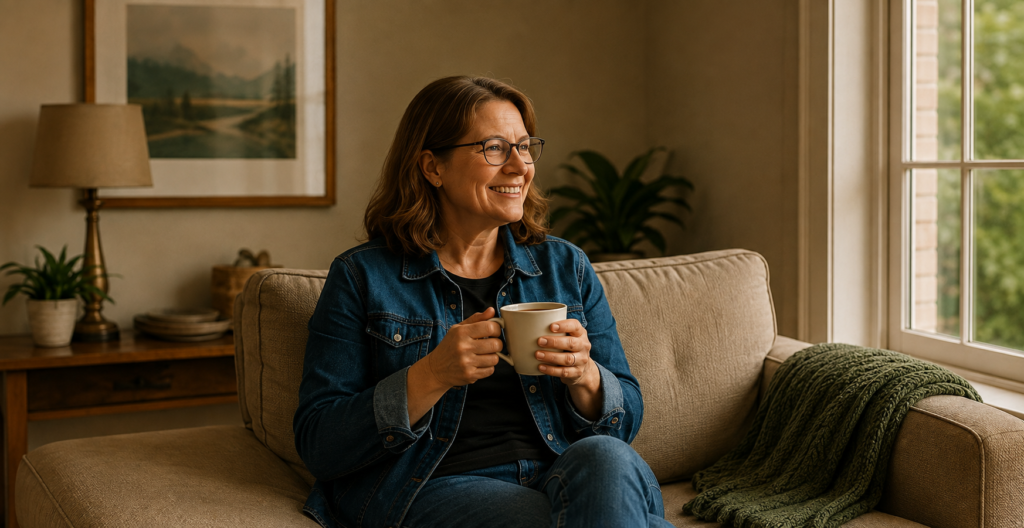
Living alone with foot drop comes with a unique set of challenges. Many everyday tasks become more complicated when there isn’t another person nearby to help carry items, move things, or provide support when needed.
The key is creating a home setup and routine that works with your current mobility needs while making daily activities safer and more manageable.
The Biggest Challenge: Moving Things Around Your Home
One of the most common challenges people living alone with foot drop mention is moving multiple items when one hand is already needed for a cane, walker, or other mobility aid.
Checklist
Use handle bags or sturdy totes to carry multiple items at once.
Accept that some tasks may take multiple trips instead of trying to carry everything in one attempt.
Move frequently used items to the level of your home where you spend the most time.
Consider using a rolling laundry cart to avoid carrying heavy loads.
Try a drag-style laundry bag for lighter items instead of lifting and carrying.
Taking extra trips may feel slower, but reducing the amount you carry at once can make daily activities safer and easier.
Setting Up Your Home to Work With You
Many people find that adapting their home environment makes a bigger difference than trying to force old routines to continue.
Checklist
Keep commonly used items within easy reach.
Minimize unnecessary trips between floors.
Store important supplies on the same level where they are used most.
Allow extra time for tasks instead of rushing.
Avoid carrying items while navigating stairs whenever possible.
Create simple routines that reduce repeated movement around the home.
A home that supports your current mobility can make everyday activities feel more natural and less exhausting.
If You’re Newly Living Alone
For some people, living alone with foot drop is not only a mobility adjustment but also a major life change. It may happen after a health event, during recovery, or after losing the support of a partner or caregiver.
Checklist
Ask family or friends for practical help when needed.
Consider services such as home assistance if certain tasks become difficult.
Connect with others who understand the challenges of adapting to life with mobility changes.
Give yourself time to develop routines that fit your new circumstances.
Finding support is part of building a safer and more comfortable daily life.
Building Confidence With Your Routine
Everyone’s experience with foot drop is different. Many people discover their own solutions through testing, adjusting, and finding what works best for their home and lifestyle.
Checklist
Experiment with different tools and routines.
Pay attention to tasks that feel unnecessarily difficult.
Look for ways to reduce effort and improve safety.
Adjust your environment instead of constantly working around obstacles.
Share successful ideas with others in the community.
There is no single perfect setup. The goal is to create a system that helps you stay independent while reducing unnecessary risks.
This article provides general information and practical suggestions for people living alone with foot drop. It is not a substitute for professional medical advice or a personalized home safety evaluation. An occupational therapist can assess your home environment, mobility needs, and possible safety improvements, including equipment or modifications that may be appropriate for your situation.